 RWF
 KES - Kenya
 UGX - Uganda
 TZS - Tanzania
 NGN - Nigeria
 ZAR - South Africa
 USD - Zimbabwe
 GHS - Ghana
 ETB - Ethiopia
 ZMW - Zambia
 USD - International

Kigali has a growing number of small studios and service firms: software developers, design agencies, research consultancies and engineering offices. Their clients are often institutions, NGOs and companies who expect clear reporting. A small team that can show exactly where a project stands wins repeat work.
You do not need a heavy method to get there. A simple weekly routine, run in one shared tool, does most of the job.
The example: a software studio in Kacyiru
A studio with eight developers and designers in Kacyiru, Kigali, builds web and mobile apps. Right now it is working on a booking app for a hotel in Rubavu, a member portal for a cooperative union and a small internal tool for a logistics company in Kigali. After launch, each client also expects support.
Work in short cycles
The studio plans its work in two-week cycles. At the start of each cycle the team picks the tasks it will finish from each project’s list; at the end it shows the clients what is done.
In NaliSuite Projects that looks like this:
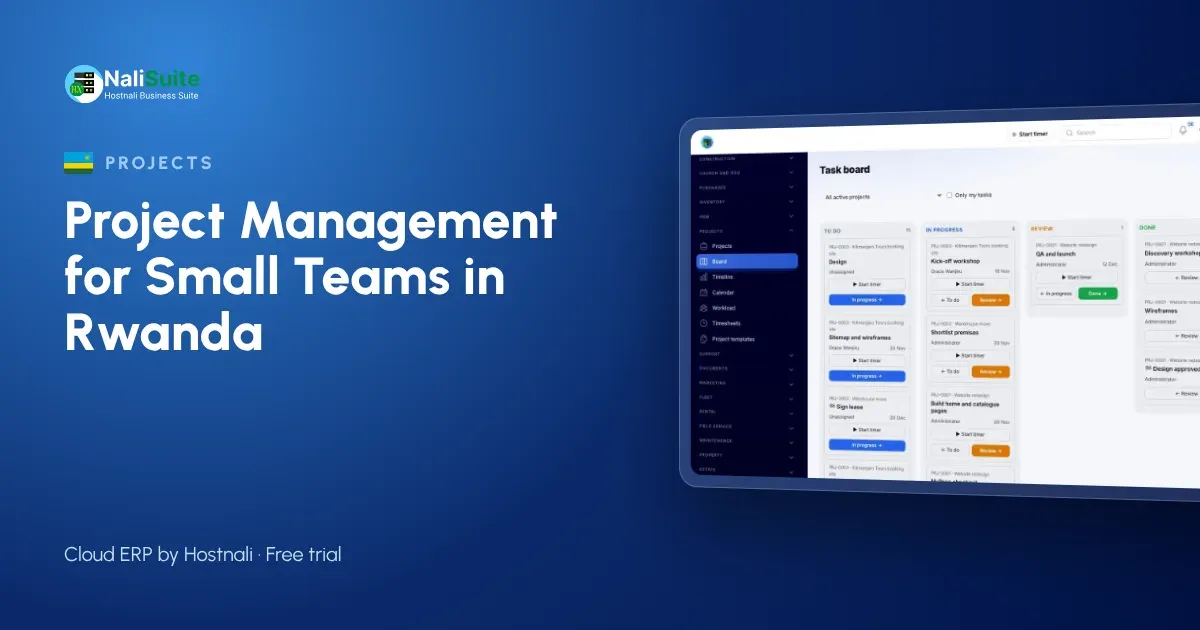
- Each client job is a project with tasks for every feature or screen.
- Tasks have an assignee, a due date at the end of the cycle and a checklist, for example “design, build, test, client review”.
- The board shows Backlog, This cycle, In progress, Client review and Done.
Short cycles make problems visible early. If the hotel booking calendar is not finished in one cycle, the team knows two weeks in, not three months in.
Four routines that keep a small team on track
A ten-minute check-in
Each morning, everyone looks at the board and says what they are working on and what is blocking them. Blocked tasks get help the same day.
A weekly look at workload
The workload view shows who is over or under booked across all three projects. When one developer is carrying both the hotel app and the cooperative portal, a task moves to someone with space.
Time logged daily
Developers log time on the task with the timer or a timesheet, and the studio lead approves it every Friday. That approved time is the basis for billing and for knowing what a feature really cost.
A client review at the end of each cycle
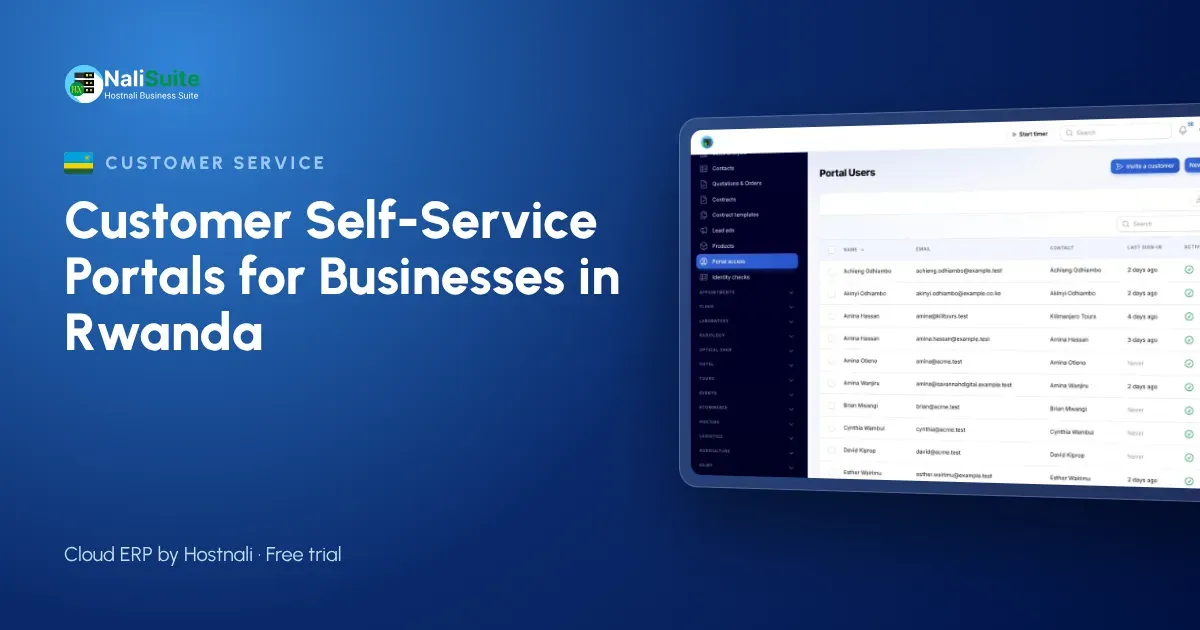
Clients see progress in the customer portal, where projects can be shown alongside their invoices and shared documents. Feedback is added as new tasks, not lost in email.
Billing the work
The studio uses different billing for different clients, which Projects supports in one place:
- Hotel booking app: fixed price paid in three milestones.
- Cooperative portal: billed on approved time each month.
- Logistics tool: a fixed price, with extra requests billed on time.
Invoices are raised in NaliSuite Invoicing when a milestone is reached or at month end. Clients can pay by MTN MoMo, Airtel Money or card, and mobile money payments land against the right invoice. Keep your invoices in line with what RRA requires of your business.
After handover: support is a project too
When the hotel app goes live, the hotel will report bugs and ask questions. Instead of letting those arrive on personal phones, the studio routes them into NaliSuite Helpdesk, where each request is a ticket with a priority and a response target. Time logged on tickets can be billed too, so a support agreement is easy to manage.
Learning from the numbers
Profitability compares what you billed with the cost of the time logged. After two quarters, the studio found that fixed-price jobs with vague requirements ran well over, while time-based work stayed healthy. It now runs a paid discovery stage before giving any fixed price.
Data and access
Projects often include client data, test accounts and staff details. Personal data is protected under Rwanda’s Law No. 058/2021 relating to the protection of personal data and privacy, overseen by the National Cyber Security Authority. Give clients portal access to their own projects only, and limit staff to the projects they work on.
Getting started this week
- Create a project for each active client job.
- Break the work into tasks a person can finish in a few days.
- Set up the board columns above and start a two-week cycle.
- Turn on time logging and agree an approval day.
- Invite one client to the portal and ask for feedback.
Clients who prefer French or Kinyarwanda
Many Rwandan clients are comfortable in English, but some prefer French or Kinyarwanda for meetings and feedback. Note each client’s preferred language on the project, and write the cycle summary in that language. Small touches like this make client reviews shorter and clearer, and they are easy to forget when the team is busy.
Frequently asked questions
Do we have to work in two-week cycles?
No. Cycles suit software and design work, but you can plan by stage or by date if that fits your business better.
Can a client see only their own project?
Yes. Each portal user sees only their own organisation’s records.
Can we bill support after launch?
Yes. Log time on helpdesk tickets and bill it, or invoice a fixed monthly support fee.
Try NaliSuite
NaliSuite includes Projects, Helpdesk, Invoicing and the customer portal on every plan, from RWF 3,500 a month. Compare the plans and run your next cycle in a free trial.