 RWF
 KES - Kenya
 UGX - Uganda
 TZS - Tanzania
 NGN - Nigeria
 ZAR - South Africa
 USD - Zimbabwe
 GHS - Ghana
 ETB - Ethiopia
 ZMW - Zambia
 USD - International

Kigali’s restaurant scene has grown quickly, from lunchtime buffets in the city centre to brochette and fish spots in Kimihurura and cafés serving Rwandan coffee. Customers pay by MTN MoMo and expect accurate bills.
Example: a lunch buffet in Kigali
A buffet restaurant in the city centre serves office workers a fixed-price lunch. The owner priced the buffet once, but ingredient costs kept creeping up and the kitchen prepared the same quantities whatever the day.
Each buffet dish now has a recipe, and the waste log records what is left at the end of service. Comparing waste by weekday showed that Fridays needed far less food than Mondays. Production now follows the pattern, and the buffet’s cost per customer is reviewed every month.
Recipes first, prices second
A menu price is only right if you know what the dish costs to make. Write a recipe for each dish with exact quantities, keep ingredient prices current, and review the cost whenever a supplier raises prices.
With the Restaurant Pro add-on, every dish is linked to a recipe, and you see its plate cost and food-cost percentage. The menu engineering view, with dishes sorted into stars, plowhorses, puzzles and dogs, tells you where to focus: promote the stars, re-price the plowhorses and rethink the dogs.
Let sales take ingredients out of stock
Counting the store room every night is slow, and counting it once a month means you discover losses too late. When recipes are linked to dishes, every sale takes its ingredients out of stock automatically, so the system knows roughly what should be on the shelf.
Compare that with a weekly count in Inventory and the gap tells you about waste, over-portioning or theft. Restaurant Pro has a waste log, so food thrown away is recorded with a reason instead of disappearing into the numbers. Reorder from suppliers with Purchases when stock drops to the level you set.
Tables, bookings and the kitchen
Orders should go from the table to the kitchen without being rewritten. Taking orders on the till at the table, or right after, keeps the kitchen and the bill in step: what the kitchen cooks is what the customer pays for.
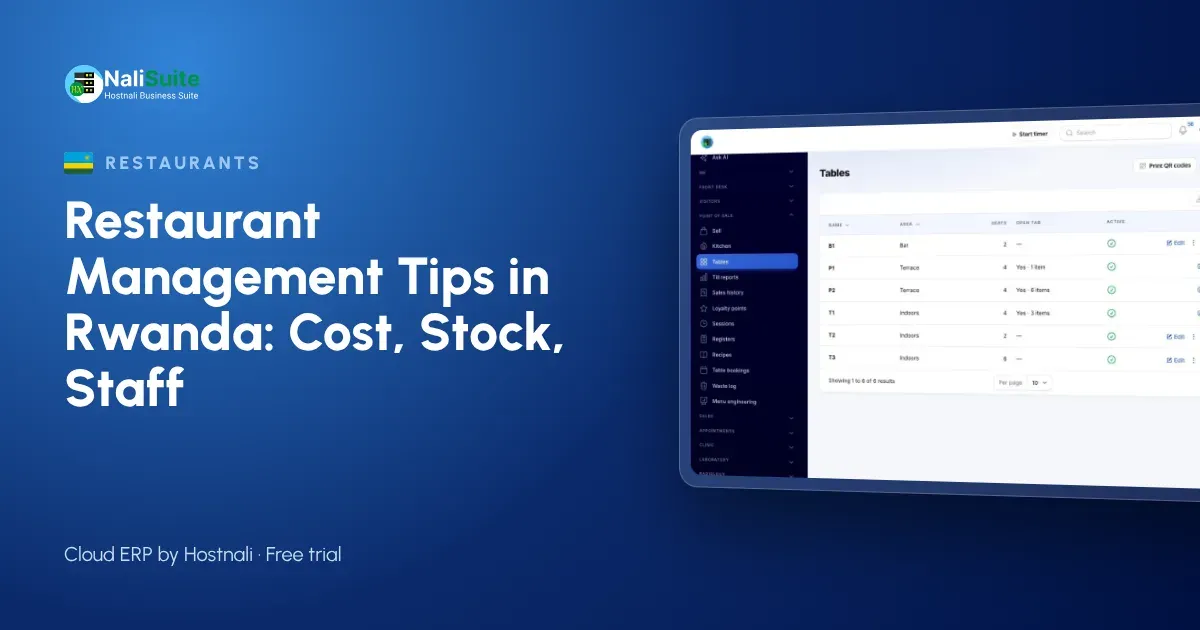
Point of Sale has restaurant tables built in, so a waiter opens a table, adds dishes through the meal and takes payment at the end, split across payment methods if the guests want. Restaurant Pro adds table bookings, so you know before service how many covers to prepare for.
A till that keeps working
Power cuts and patchy internet should never stop service. Choose a till that keeps selling offline and syncs every sale when the connection returns. NaliSuite’s offline POS does exactly that, on a phone, tablet or laptop.
Take payment the way customers want to pay: cash, MTN MoMo or Airtel Money. Each payment is recorded against the sale, so the cash-up at the end of the shift is a check, not a guessing game. See payments for how pay links and prompts work.
Rwandan details
Most customers pay by MTN MoMo or Airtel Money, so record those payments on each bill. For VAT and EBM receipt requirements, check with the RRA or your accountant.
If you also cater conferences or supply other outlets, the Food production add-on costs catering quotes per head and manages deliveries.
A simple weekly routine
- Monday: review plate costs for any dish whose ingredients changed price.
- Wednesday: count the ten most expensive ingredients and compare with expected stock.
- Friday: check table bookings for the weekend and order ingredients to match.
- Every day: log waste with a reason and cash up each till against its sales.
Small, regular checks catch problems while they are still cheap to fix.
Pay staff on time, from the same records
Wages paid late or wrongly are a fast way to lose good cooks and waiters. Keep attendance in HR, with check-in from the phone, and run pay from those records in Payroll, with payslips by email or WhatsApp.
Separate logins for each person on shift, instead of one shared login, protect honest staff and make cash differences easier to trace.
Frequently asked questions
Can customers pay by MTN MoMo?
Yes. MoMo and Airtel Money payments are recorded against the bill, alongside cash and card.
Can I cost a buffet?
Yes. Give each buffet dish a recipe and use the waste log to see what is left after service, so you can cost the buffet per customer.
What does Restaurant Pro add to the till?
Recipes that deduct ingredients from stock with every sale, plate cost and food-cost percentage per dish, menu engineering, table bookings and a waste log. It is an add-on to any NaliSuite plan.
Try NaliSuite
Start with the till and inventory, then add Restaurant Pro when you are ready to cost every dish. Plans start at RWF 3,500 a month. Read about NaliSuite for restaurants and choose a plan.